Showing posts with label build. Show all posts

Saturday, 21 May 2011

Need to Know: the basis of all story

37comments

Any story requires the reader to want to know what happens next. This need to know is called suspense. Usually people think of the big, terrifying, heart pumping moments when they think of the term, but wondering if you need to buy milk is also suspense.


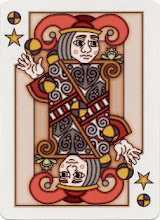
If you can build and maintain suspense in a story, at whatever level, it will be more interesting to read for the reader. See the box above? What’s inside? Not knowing makes you curious, huh?

What if I then say, I’ll tell you tomorrow, and take the box away?

Wednesday, 11 May 2011

Story seems to be the hardest word

33comments
Lately I’ve been critiquing a lot of writing where the story is full of movement and people go from A to B in search of whatever, but it reads very dull and lifeless. All genres, no matter what demographic it’s aimed at, need story. But even if all the basic requirements are fulfilled, it can still read flat.

A guy is hungry. He has no money. He borrows some from a friend. He goes to the store. He buys some food and eats it. Now the friend wants a favour in return for the loan...

Things happen, someone wants something, there’s an obstacle, a solution is produced and there’s even a suggestion it’s headed somewhere. So why doesn’t it grip you? What we have so far is just a bunch of stuff happening. It isn’t interesting in and of itself, and if you want the reader to be engaged it needs something more.

So, what differentiates story from a bunch of stuff that happened?

Friday, 1 April 2011

A is for Angry Young Men

37comments


It’s easy enough to say a character should be active, driving the story forward, have a goal etc. but what if he isn’t that sort of character?

A lot of young male writers that I read and critique in the various writers’ workshops I belong to, write about young male characters who don’t know what they want, who haven’t decided what their goal is, who don't care about anything. These writers want to write a story of discovery. They want to write about how to figure out which are the important things. They want to rage against the ridiculousness of life, in no particular order.

They want to write about these things because life doesn't conveniently offer up a neat, pre-packaged plot to give existence meaning and direction. That’s what they’re interested in, because that’s what they feel about their own lives. Certainly people have written books about such characters, so why not them? If it reads slow or aimless, then it’s literary fiction. It’s character driven. It’s intentionally mundane to reflect life. But how do you stop it being boring for the reader?

Thursday, 3 March 2011

Go with the flow

8comments
Apart from what a story is about, there is also the matter of how it is written. Once the reader is caught up in the story they can find themselves being drawn irresistibly through the exciting parts but just as irresistibly through slower sections. To some degree this is to do with being engaged with the story overall and the characters, but it is also to do with the way it is written. The way the words are put together, the construction of the narrative, the syntax used to create a rhythm.

Some people are obviously just gifted in this regard. They naturally put words together in an attractive way. But that doesn't mean it can't be learnt. On the most basic level there is spelling and grammar and typos. Just being able to read the text will make the flow better. But assuming those things are at a competent level, there is  another level of sophistication beyond that, which will make the narrative flow.

Wednesday, 23 February 2011

Build a story, leave the door open

13comments
A story is more than a series of events that happen. Scenes have to be interesting, they have to build and they have to play a role in communicating the overall narrative. But how do you know if the scene you have written is helping to tell the story or distracting from it? One way to decide is to look at the scene and ask yourself what is its significance? Not to the character, or even to the writer, but to the story.

Most things that happen in a story can be said to have some sort of influence on the greater scheme of things if you really push it. A girl walking down the street on the way to school who notices a red sports car, which is then never mentioned again, could be said to have some symbolic or metaphorical resonance with the themes of the story. That's fine, but once you know that, you are then able to decide whether that's the best way to achieve that effect (which it may well be). Problem is most people don't do that and leave it hanging as a thing that happened in the story just because. And that's what it will read like.

If a woman is getting ready to go for a job interview and the phone rings and it’s some guy trying to convince her to switch phone plans, and once she gets rid of him she goes off to her a job interview, what’s the significance to her story? If it makes her late and she misses the bus, then that could have a very strong impact. If the guy tells her that she'd be stupid to pass up this limited special offer and she gets very irate, calling him a cocksucker who should stick his head up his own ass so he has somewhere quiet to eat his bag of dicks, and then puts the phone down and goes back to being very normal and getting ready (pink shirt or white shirt?) that tells us something about her but it has a particular significance since she's going for a job interview where that aspect of her personality may prove to be a liability (although personally I'd hire her on the spot).
Related Posts Plugin for WordPress, Blogger...
 

MOODY WRITING © 2009

PSD to Blogger Templates realized by OOruc.com & PSD Theme designed by PSDThemes.com