Monday, 19 December 2011

No Subtext Without Context

11comments
In order to create a story that resonates and affects people on more than a superficial level, you need more going on than appears to be going on.

For subtext to work you need two things:
1. There must be a clear and plausible reason for why a character does something.
2. That reason is not the true reason they’re doing it.

The character may or may not be aware of the real reasons for their behaviour, but the writer needs to know exactly what is behind a character's actions. It may seem an attractive proposition to just write the story and hope the deeper meaning inserts itself, but that is not going to produce a satisfying story.

Thursday, 15 December 2011

Dead Story Walking

26comments

You’re writing a scene and it’s active and energetic. The character has a goal, he’s motivated and the stakes are high. He’s putting maximum effort into getting the job done.

And yet...

On his tail are one or more highly incentivised adversaries, doing whatever it takes to bring down our hero.

And yet...

Everything is in place, all the elements for a good scene are present. And yet... it doesn’t work. The action feels flat, the outcome feels predictable, and even though it’s all vivid and clearly conveyed, it’s boring. Why?

Monday, 12 December 2011

Your Dialogue Is Showing

19comments


Whether you are a strong advocate of Show vs. Tell, or you find it an overused instruction that’s oft misused, one thing is for certain: dialogue is always considered showing.

There are some people who don’t really understand why this is so, to them dialogue often seems the very opposite of showing: people telling each other things.

The reason isn’t do with what is being said—the content of speech can be all telling and it would still be considered showing—but because you are enabling the reader to visualise what’s happening in the scene. Someone is talking.

Thursday, 8 December 2011

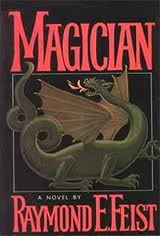
Chapter One: Magician by Raymond E. Feist

11comments

The latest genre in my series of first chapter dissections is Fantasy. As with the other books I’ve analysed (here), I will attempt to work out how a debut novelist managed to create an opening to his story that successfully pulls readers in.

Raymond E. Feist’s Magician (1982) was hugely successful, and is still considered one of the great fantasy books today. Coming up with a swords and sorcery epic at a time when fantasy of that kind had pretty much been done to death shows there’s always room for more stories, in any genre. It's such a good book that it encourages you to read the many sequels and follow-ups, all of which are terrible.

The storm had broken.

Monday, 5 December 2011

Writers Who Know Everything

30comments
A problem I’ve been coming across a lot recently when reading and critiquing on various writing workshops is the writer using his knowledge of future story events to guide present ones. 

This is a fairly simple thing to fix, the problem is more in trying to convince the writer they are in fact doing this. It’s one of those things where if the person isn’t aware they’re doing it, proving it to them can be very difficult. They just can't see it.

The reason this is something to be aware of is because misusing that knowledge can make the story lose credibility. If a character just happens to go to the right place at the right time, or if they assume or guess or hope for the best — and luckily everything works out in a way that's very convenient for the story, it will feel contrived and fake. Here's an example of what I mean:

Thursday, 1 December 2011

Interesting Characters: You are what you eat

21comments


Story is viewed differently by the writer than it is by the reader.

A writer knows what kind of person he is writing about, and uses that to inform what that character does on the page.

A reader knows what a character does and uses that to understand what kind of person that character is.

Both are looking at the same thing, but from different ends. The thing they are both looking at is this: what people do reveals the truth of who they are.

But truth and fact are NOT the same thing.

Monday, 28 November 2011

Bunch of Cults No.6: 1Q84

18comments

This is part of an ongoing series of weird and wonderful stories from off the beaten path. Others in the series can be found here.

This post is in two parts. Firstly a look at the latest book from Haruki Murakami, probably the bestselling ‘cult’ author in the world. And secondly a few thoughts on the power of story over technique. If you’re telling an engrossing tale, does it really matter how you go about it?

1Q84 by Haruki Murakami is a science-fiction story. Sort of. It’s set in a parallel 1984, that is more or less identical to the real 1984. Except for the two moons in the sky (that only a few people notice). It is about two people, a lonely young woman, and an aspiring novelist. And it is about a fantastical group of Little People who are trying to control the balance of good and evil in the world. 

Thursday, 24 November 2011

Something to be thankful for

9comments

Monday, 21 November 2011

Two Pronged Attack

15comments


When you write a story and then ask someone to read it and give you feedback, you are asking two things:

1. How well have I said the thing I’m trying to say?
2. Was it worth saying?

Obviously you can give an opinion on both of those, but in order to help the writer improve things, you may also want to offer some suggestions.

Friday, 18 November 2011

Best Hyperbole Ever!

16comments
Two men each have a box. Both are selling tickets for a peek inside their box. Both make extravagant claims about how impressed you’ll be with what you’ll see. But neither is willing to tell you what they've got in there.

Roll up, roll up. The stupendous, astonishing, one in a lifetime, miracle in a box. Get your ticket here. Be the first to see what’s in the Box o’ Dreams.

Now, if I tell you that one man has got something pretty amazing in his box, and the other has half a dog turd, how can you tell which is the box worth buying a ticket for?

The answer is you can’t. It’s just as easy to make hyperbolic promises about something rubbish as it something awesome if you don’t have to back up your claims. So, if you happen to actually have something really cool in your box, how do you let people know you’re the real deal?
Related Posts Plugin for WordPress, Blogger...
 

MOODY WRITING © 2009

PSD to Blogger Templates realized by OOruc.com & PSD Theme designed by PSDThemes.com